Does a story (or any other creative work, for that matter) need to evoke hope if it’s to be life-giving? Or liberating? Or beautiful, true, or otherwise “good”?
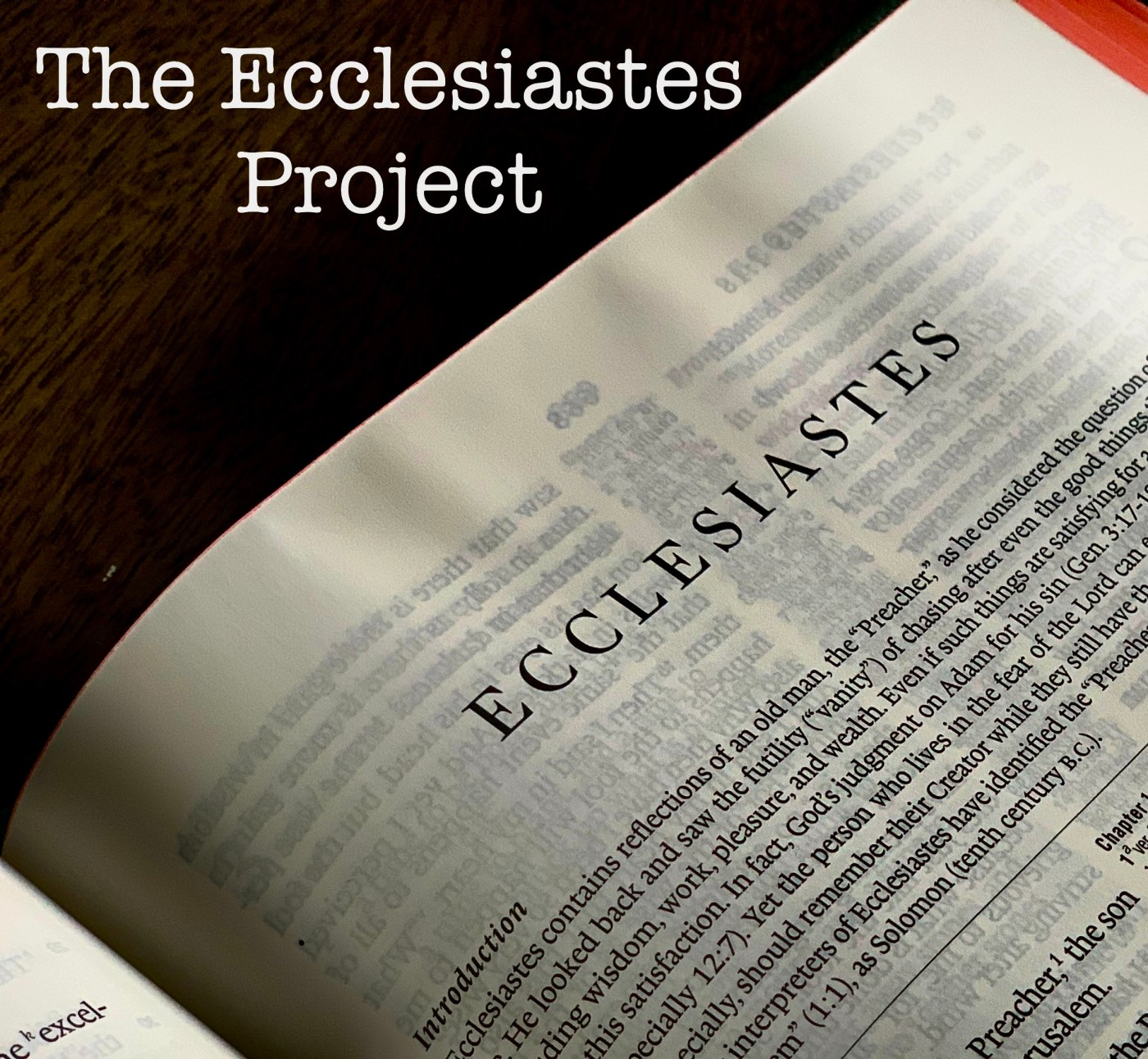
I’ve been pondering this since a conversation with colleagues a while back. As I’ve mentioned, I’m in the middle of something called the Religion, Spirituality, and the Arts Seminar (RSA), which gathers a cohort of artists each year for shared study of a sacred text with the guidance of a multidisciplinary faculty. This year we’re focusing on Ecclesiastes, and I’m simply not convinced by the advice that Ecclesiastes offers.
“There is nothing better for a man,” says the author of Ecclesiastes, who identifies himself in this translation as Qohelet, “than to eat and drink and sate himself with good things through his toil” (2:24, Robert Alter translation). Qohelet makes several such statements to much the same effect, so he arguably does identify a positive or life-affirming approach to human days. I don’t find it terribly convincing, though.
For the vast amounts of prose that Qohelet gives in Ecclesiastes to lamenting the ephemeral nature of things, the injustices of existence, the inadequacies of wisdom, and the failures of human memory, he gives relatively little attention to the project of eating, drinking, and sating oneself with good things through one’s toils. If it’s a good thing, I want to hear more about it.
Likely, Qohelet’s point in writing Ecclesiastes does not involve waxing eloquent about what he enjoys or, for that matter, about anything at all calling for joy or optimism. Take a look at the well-known refrain (complaint?) that “there is nothing new under the sun” (1:9, Robert Alter translation). Qohelet extends this to just about everything, advising later, “If you see the oppression of the poor and the perversion of justice and right in the province, be not amazed at the matter” (5:8, Robert Alter translation). As in, it’s happened before, and it will happen again. Qohelet has already said, “The crooked cannot turn straight nor can the lack be made good” (1:15, Robert Alter translation). What was is what is and what will be.
The man is jaded. It sounds like he’s seen it all (or so he claims) and can’t muster any optimism as to what more may be possible for human life. Sounds like despair, doesn’t it?
And because it does, at least to my ears, sound like despair, I have to admit that part of me feels glad to find it given such space in the Bible. Qohelet speaks with a voice of such deep discouragement. He speaks as someone who refuses to be cheered up or moved on from his lament. Grief, I find, can take us to such a place. Many human experiences can. Whatever else the Bible may say about hope in God, it doesn’t dismiss Qohelet’s voice of despair as simply lacking adequate faith. Quite the contrary. A voice of despair is given an honored place to speak within the Bible. I’m glad for that.
We have so many reasons, after all, to feel deeply troubled in our world today. Without going into any depth on topics such as the ecological crisis of our globe or the humanitarian crises of current war-time settings, I will note the potential for overwhelm as we encounter the reality of any given day. I find Qohelet’s voice of despair from all those years ago still resonating. His discouragement with his own experiences and observations of the world, as well as his seeming inability to get over such concepts as justice (even though he can’t find it happening in the world around him), still speak.
My cohort’s study of Ecclesiastes culminates in creative projects, from our own artistic disciplines, that respond to Ecclesiastes. Even before I started writing the novella To Tend the Wind, which will be my final project, I’ve known I would set my story in contemporary times. While Qohelet’s ancient context differs from ours in many ways, he addresses so many issues that I want my story to explore with a contemporary perspective.
I also want to explore Qohelet’s “there is nothing better for a man” statements about eating, drinking, and being merry. I’m not convinced by them because they sound rather half-hearted, at least to me. Am I mishearing Qohelet? Tone can be hard to interpret from the printed page. As a writer, I know that. And experiencing good things in our lives and translating them into some sort of touchstone for hope happens for different people in different ways.
Writing as a Christian theologian, Robert Saler uses the term “bright silence” to speak of “a resolute refusal to let hope in the resurrection silence creation’s cry of pain in the here and now” (p. 62). While Saler’s reflections speak specifically to the band Radiohead and the topic of environmental issues, his discussion strikes me as helpful in considering if and how an artwork or expression of faith can speak to hope. When we allow for the legitimate sadness that comes from encountering the forces of death and injustice to which life is subject, then we can create a very special kind of space. It’s a space that holds sadness, as Saler describes it, in “the larger context of hope” (p. 61).
Perhaps I’ve been wanting more vivid glimmers of hope from a text that simply has other kinds of work to do. Perhaps Qohelet’s gift has been to create a “bright silence” and the kind of space that honors legitimate sadness, frustration, discouragement, and despair without rushing that experience to an expression of hope. I’m dwelling with that possibility. At the same time, I’m not dismissing my reaction of wishing to hear Qohelet say more, tell more stories, share more anecdotes from his experience about what is actively good in this thing called life. I think there’s more to say about a person’s choice to live, to really live and carry on in the most constructive ways possible in spite of what is frustrating, saddening, or downright ephemeral in this life.
I’m reminding myself that if I think there’s more to say, then that’s probably a call for me to say and write more, myself. It’s what I’m trying to do now. This blog piece is part of a series of ongoing reflections on my experiences with the RSA seminar and my fiction project emerging as a response to the book of Ecclesiastes (click here to read more). In the meantime, let me ask: the last time you read Ecclesiastes, what did you think of it and how did it feel to you? Did it resonate? Jar? Satisfy? Or leave you wanting more? What do you make of this curious book of the Bible?
2025 Update: An expanded version of the novella To Tend the Wind, retitled Kohelette: A Novel, will be available from Clay Patin Press in 2026.

 Callie J. Smith
Lovely post, Callie!
LikeLike
Thanks, Deb!
LikeLike